
Why your numbers matter, what your traditional panels are missing, and how to read your body's most important signals.
TL;DR
- Standard panels miss what modern science says matters most. Most members are still evaluated using a cholesterol panel that hasn't fundamentally changed in decades, while the markers that better predict long-term risk often go untested.
- ApoB, Lp(a), fasting insulin, and p-tau 217 are among the most important biomarkers most members have never heard of. Each one provides earlier, more accurate signal than the markers it complements.
- Trends matter more than snapshots, and constellations matter more than single numbers. Biomarkers are most useful when read over time and in context with one another.
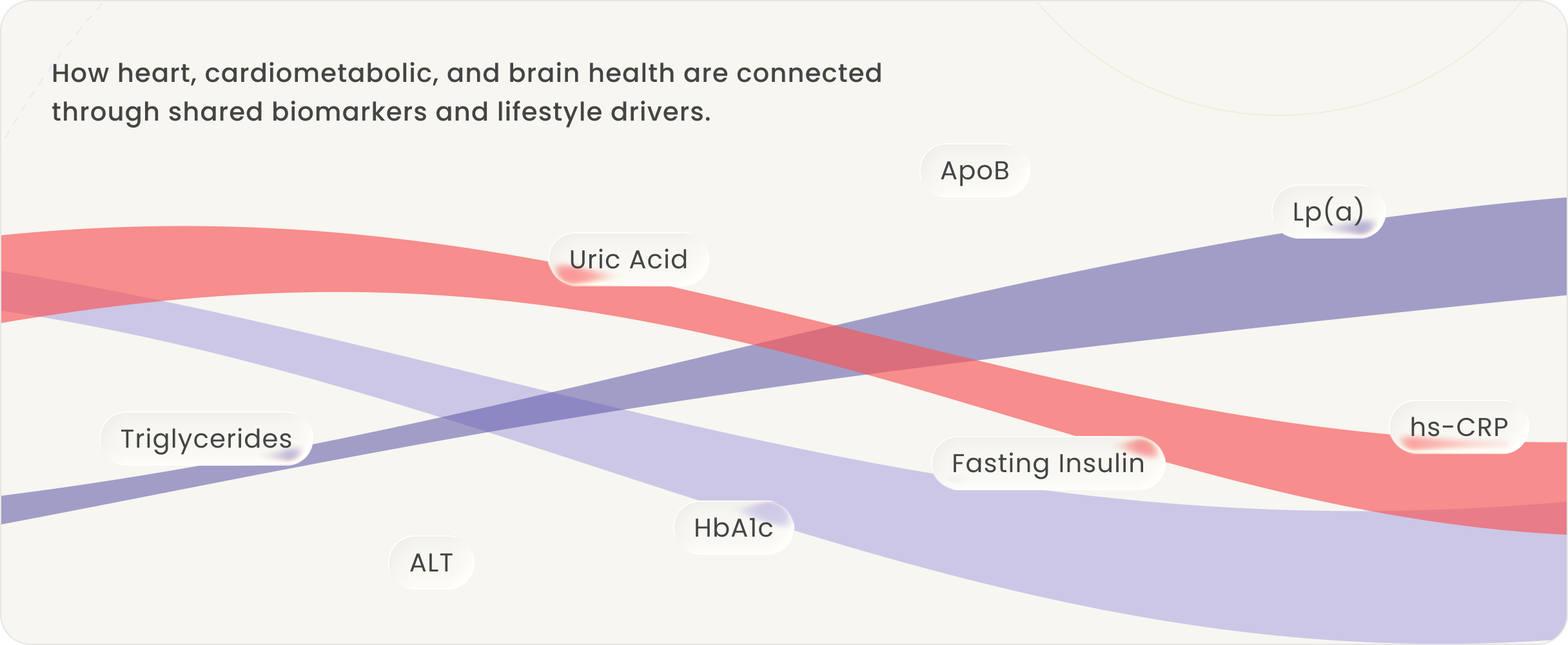
- Heart, cardiometabolic, and brain health are deeply interconnected. The same lifestyle levers (sleep, activity, anti-inflammatory nutrition, stress management) influence all three systems at once.
- Knowing your numbers is the start. Understanding them is the unlock. Ucardia's care team and Arny help members interpret their data, connect it to daily choices, and act on it with confidence.
Why Biomarkers Matter More Than Ever
For most of modern medicine, biomarkers have been used reactively. A doctor would order a panel, look at the numbers, and flag what fell outside the reference range. If everything came back "normal," the conversation often ended there.
Longevity care turns that approach upside down. Biomarkers are no longer just diagnostic tools. They are early signals, trend lines, and decision-making levers that, when read correctly, can shift the entire trajectory of someone's healthspan. The right biomarkers, tracked over time and interpreted in context, can detect risk decades before disease shows up. They can guide nutrition, activity, sleep, and stress decisions in ways that compound across years. And they can give members a sense of agency over their own bodies that traditional medicine rarely offers.
The challenge is that most people are still receiving the same basic panels their parents did, and most of those panels are missing what modern science now knows matters most.
This is a guide to the biomarkers that actually matter for long-term health, organized around three of the most important systems: heart, cardiometabolic, and brain. It is not a substitute for clinical care. It is a primer designed to help members ask better questions, engage more deeply with their care team, and understand what their body is trying to tell them.
A Quick Word on How to Think About Biomarkers
Before getting into specifics, a few principles worth holding onto.
No single number tells the whole story. Biomarkers are most valuable when they're read in constellation, not in isolation. A "normal" LDL alongside a high ApoB tells a very different story than a high LDL alongside a low ApoB.
Trends matter more than snapshots. A one-time reading is a data point. Three readings over eighteen months is a story. The most important question is not "what is my number today" but "where is it heading and why."
Reference ranges are not the same as optimal ranges. Most lab reference ranges are based on population averages, not on what's optimal for long-term health. A value that's "normal" by lab standards may still be suboptimal for longevity.
Context is everything. Two members can have identical biomarker profiles and need very different plans depending on age, genetics, family history, lifestyle, and goals.
With that foundation, let's get into the markers themselves.
Heart Health Biomarkers: Beyond the Standard Cholesterol Panel
Cardiovascular disease remains the leading cause of death globally, and the science of how to assess and prevent it has advanced significantly. Yet most people are still being evaluated using a standard lipid panel that hasn't fundamentally changed in decades.
LDL Cholesterol
LDL, or low-density lipoprotein, is the marker most people know. It's often called "bad cholesterol" because elevated LDL contributes to plaque buildup in the arteries. LDL is still useful, and it's still the starting point for most cardiovascular conversations. But on its own, it's incomplete. Two people can have the same LDL level and very different actual cardiovascular risk depending on what their LDL particles look like and how many of them are circulating.
ApoB
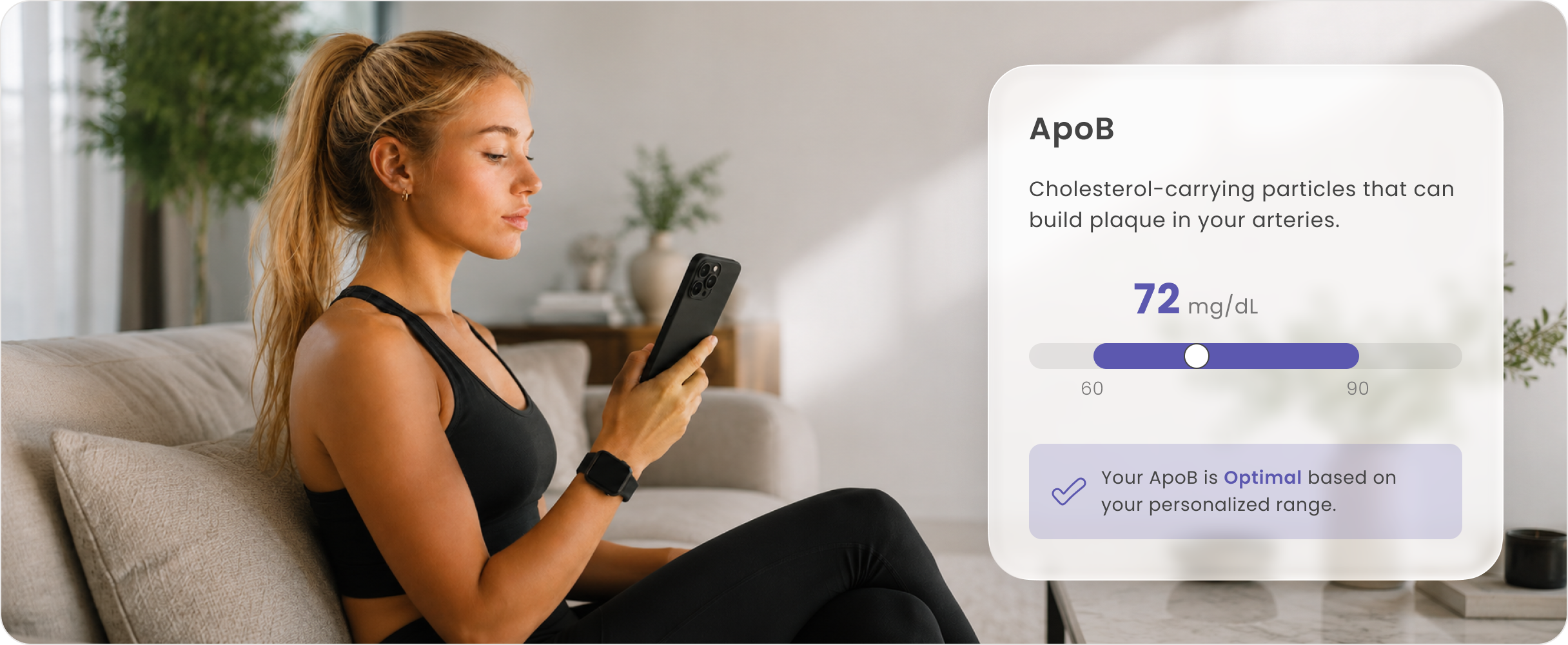
ApoB, or apolipoprotein B, is arguably the most important cardiovascular biomarker most members have never heard of. ApoB measures the actual number of atherogenic particles in your blood, the particles that drive plaque formation. Where LDL tells you the cholesterol content, ApoB tells you the particle count, and modern cardiology increasingly views ApoB as a more accurate predictor of cardiovascular risk than LDL alone.
If your LDL looks fine but your ApoB is elevated, you may still be at meaningful risk. If both are elevated, the case for intervention is much stronger. Asking for ApoB testing is one of the highest-leverage steps a member can take in modern cardiovascular care.
Lp(a)
Lp(a), or lipoprotein little a, is a genetically determined risk factor that elevates cardiovascular risk independently of LDL and ApoB. Roughly one in five people have elevated Lp(a), and most don't know it because it's not part of standard panels. While Lp(a) can't be lowered significantly through lifestyle alone, knowing the number matters. It influences how aggressively other risk factors should be managed, and it provides important context for family members who may share the same genetic risk. Every adult should know their Lp(a) at least once.
hs-CRP
High-sensitivity C-reactive protein measures systemic inflammation, and inflammation is now understood to be a foundational driver of cardiovascular disease, metabolic dysfunction, and even cognitive decline. Elevated hs-CRP can indicate a chronic inflammatory state that increases risk across multiple systems. The good news is that it's highly responsive to lifestyle changes: better sleep, regular activity, anti-inflammatory nutrition, and stress management can all move the needle.
Triglyceride-to-HDL Ratio
The ratio of triglycerides to HDL cholesterol is one of the most underappreciated cardiovascular signals. A high ratio often points to underlying insulin resistance and metabolic dysfunction, even when other markers look acceptable. It's a quiet but powerful early warning system that bridges cardiovascular and metabolic health.
Cardiometabolic Biomarkers: Catching Dysfunction Early
Type 2 diabetes, prediabetes, fatty liver disease, and metabolic syndrome have become some of the most common chronic conditions, and they often develop silently for years before showing up on standard screenings. The right cardiometabolic biomarkers can catch dysfunction early, when it's most reversible.
HbA1c
HbA1c reflects average blood sugar over roughly the past three months. It's a useful, well-established marker, but it has limitations. By the time HbA1c is elevated, metabolic dysfunction may have been developing for years. It's a lagging indicator, which is why it shouldn't be the only metabolic marker members rely on.
Fasting Insulin and HOMA-IR
Fasting insulin is one of the earliest signs of metabolic dysfunction, often elevated years or even decades before blood sugar rises. HOMA-IR is a simple calculation that uses fasting insulin and fasting glucose to estimate insulin resistance. Together, these two markers give a far earlier and more sensitive picture of metabolic health than fasting glucose alone. Members who only ever check fasting glucose may be missing the very early stages of a problem that's silently building.
ALT and Liver Markers
Liver enzymes like ALT are often overlooked outside the context of liver-specific concerns, but they matter for cardiometabolic health. Elevated ALT can be a sign of non-alcoholic fatty liver disease (NAFLD), which is now one of the most common metabolic conditions and a significant contributor to cardiovascular and metabolic risk. Catching it early is critical because it's highly responsive to nutrition, weight management, and activity changes.
Uric Acid
Uric acid sits at the intersection of metabolic health, cardiovascular risk, and inflammation. Elevated levels are associated with insulin resistance, hypertension, kidney issues, and gout. It's a marker that often gets ignored until symptoms appear, but it provides useful early signal when included in a longevity-focused panel.
Brain Health Biomarkers: The Frontier of Cognitive Longevity
Brain health is where the biomarker conversation has shifted the most dramatically in recent years. Until very recently, there were essentially no reliable, accessible ways to assess neurodegenerative risk before symptoms appeared. That is changing fast, and members have more tools than ever to protect long-term cognitive function.
p-tau 217
p-tau 217 is one of the most exciting developments in brain health screening. It's a blood-based biomarker that can detect Alzheimer's-related pathology years before clinical symptoms develop. p-tau 217 testing is becoming increasingly available and represents a major step forward in early detection. For members with a family history of dementia or specific risk factors, this is a conversation worth having with their care team.
Neurofilament Light Chain (NfL)
NfL is a marker of general neuronal damage and is elevated in a range of neurodegenerative conditions. It's not specific to any single disease, but it's a useful broad signal of brain health and can help track changes over time.
ApoE Genotype
ApoE is a gene that influences how the body processes cholesterol and is also one of the strongest known genetic risk factors for late-onset Alzheimer's disease. Members who carry one or two copies of the ApoE4 variant have elevated risk, though it's important to note that genetics is not destiny. Lifestyle factors (sleep, cardiovascular health, metabolic health, activity, cognitive engagement, social connection) all meaningfully influence whether genetic risk translates into disease. Knowing ApoE status can be empowering rather than fatalistic, because it allows for more focused prevention.
Homocysteine
Homocysteine is an amino acid that, when elevated, is associated with both cardiovascular and cognitive risk. It often reflects underlying deficiencies in B vitamins (B12, B6, folate) and can be addressed through nutrition and targeted supplementation. It's a relatively simple test that provides meaningful information about both brain and heart health.
Vitamin B12 and Vitamin D
Both deserve a mention. Low B12 can mimic cognitive decline and contribute to neurological symptoms. Vitamin D deficiency is associated with a range of poor health outcomes, including cognitive issues, mood disorders, and immune dysfunction. Neither is exotic, but both are commonly under-checked.
How Heart, Metabolism, and Brain All Connect
One of the most important takeaways from modern longevity science is how deeply these three systems are linked.
Cardiovascular health drives brain health. The same vascular system that supplies the heart also supplies the brain, which is why cardiovascular risk factors like high blood pressure, elevated ApoB, and chronic inflammation are also among the strongest predictors of cognitive decline.
Metabolic health influences both. Insulin resistance is increasingly understood as a major driver of cardiovascular disease and a meaningful contributor to neurodegeneration. Alzheimer's disease is sometimes called "type 3 diabetes" because of the role insulin signaling plays in the brain.
Inflammation ties them together. hs-CRP and other inflammatory markers show up across cardiovascular, metabolic, and cognitive risk profiles, which is why managing inflammation through lifestyle is one of the most universally beneficial interventions in longevity care.
This is exactly why whole-person longevity matters. You cannot optimize one system in isolation and expect the others to follow. The most powerful interventions, like quality sleep, regular activity, anti-inflammatory nutrition, and stress management, support all three systems at once.
How Ucardia Helps Members Make Sense of It All
Knowing what biomarkers matter is the first step. Knowing what they mean for you, and what to do about them, is where most members get stuck.
Ucardia's care model is designed to close that gap. Members work directly with a network of health coaches and dietitians who help interpret results, connect them to lifestyle changes, and build personalized plans rooted in each member's goals, history, and data. The clinical depth and human expertise of the care team is the foundation.
Arny, the AI-powered companion built into the Ucardia app, serves as a copilot in care. When a member opens a lab report at 9 p.m. and wants to understand what their ApoB or p-tau 217 actually means, Arny is there to explain in plain language, tie the number back to the member's broader picture, and help them prepare for their next conversation with their care team. Arny also tracks biomarker trends over time, surfaces meaningful changes, and helps members see how their daily choices are influencing their numbers.
Together, the care team and Arny give members something that has been historically rare: continuous, personalized, deeply human guidance through the complexity of their own health data.
What to Do Next
If you're a Ucardia member, your care team can help you understand which of these biomarkers make sense for your situation, what to test, when to retest, and how to interpret your results in context. Arny is available in the app any time you want to dig deeper or make sense of a result on your own schedule.
If you're not yet a Ucardia member, the most useful next step is to know your numbers. Ask your provider about ApoB, Lp(a), hs-CRP, fasting insulin, and HbA1c if you haven't seen them recently. Ask whether p-tau 217 or ApoE testing might be appropriate given your family history. The more you know, the more confidently you can advocate for the kind of care that protects your long-term health.
Biomarkers are not the destination. They are the map. The destination is more years of feeling strong, sharp, and capable, alongside the people you love.
That is what Ucardia was built to support, and it's what every conversation with Arny is designed to help you reach.
Request a demo to bring Ucardia to your population, or download the app to start your own journey today.
